Glaronisi Koufonisia: The islet with 2 completely different faces
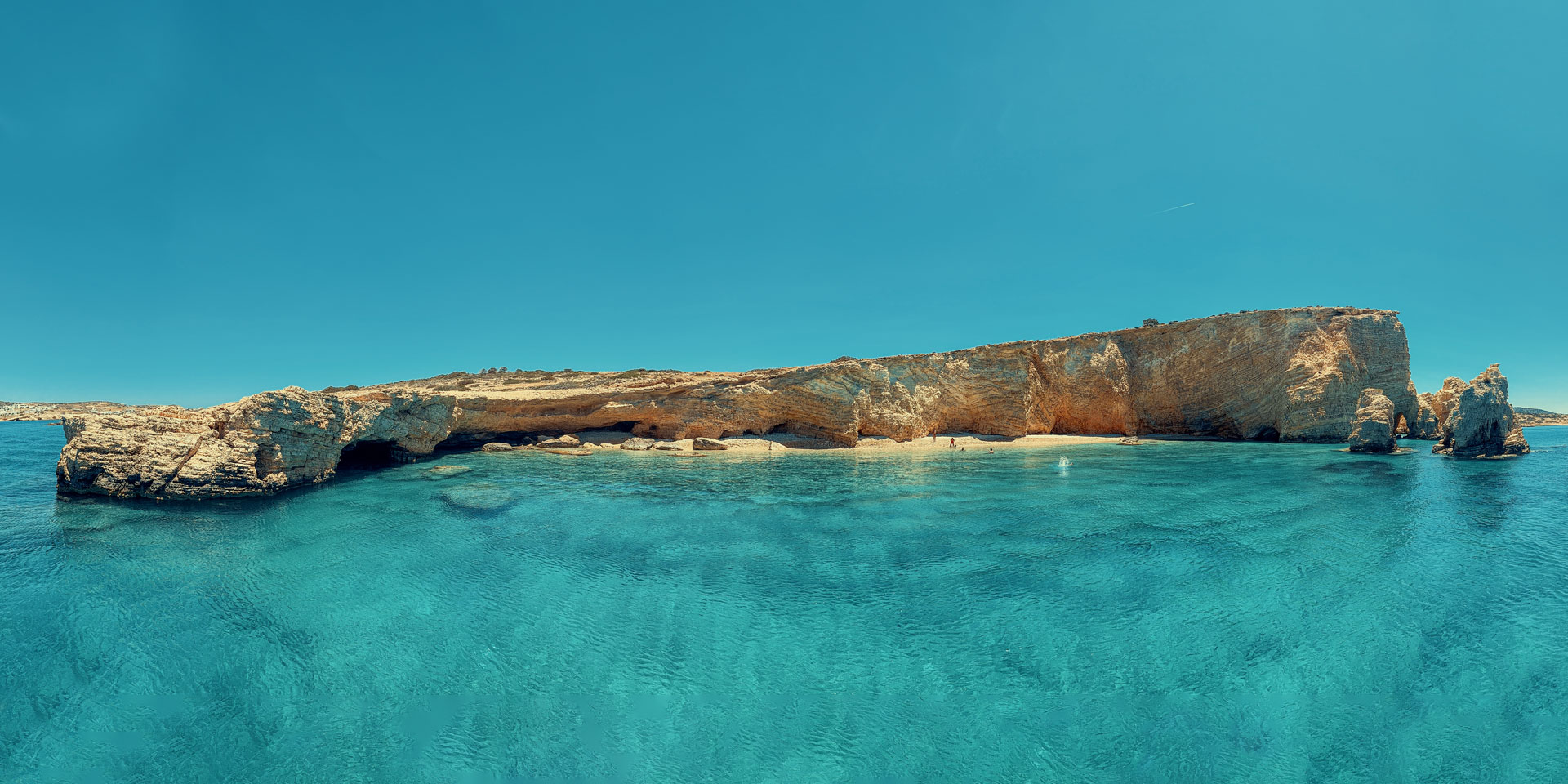
Most people who visit Koufonisia see Glaronisi from a distance. It sits just east of Kato Koufonisi, visible from the beaches and the waterfront and from that angle it looks like what it is: a smooth, gently sloping islet rising quietly out of the Aegean. Unremarkable, almost. That’s the western face – the one Glaronisi Koufonisia shows to the world. The eastern face is something else entirely. Vertical cliffs, sea caves, hidden beaches that measure their width in meters and water that sits at a color between turquoise and emerald that doesn’t exist anywhere else nearby. The only way to see it is to go around. And the only way to go around is by boat.
Glaronisi Koufonisia: what’s actually on the other side
Glaronisi – named after the seagulls (glaros) that nest here in their hundreds – is a small uninhabited islet sitting roughly in the center of the four-island group formed by Ano Koufonisi, Kato Koufonisi, Keros and Glaronisi itself. Archaeologists have speculated that in the distant past, these four islands may have been a single landmass – or at least much closer together than they are today. The geography still feels like it’s trying to hold them together.
From the west, Glaronisi looks benign. The hillside rises in a smooth, unbroken slope, with no dramatic features visible from the Koufonisia waterfront. Furthermore, that’s the version most visitors carry home in their memory – the outline of a hill across the water, glimpsed from a beach towel.

The eastern face
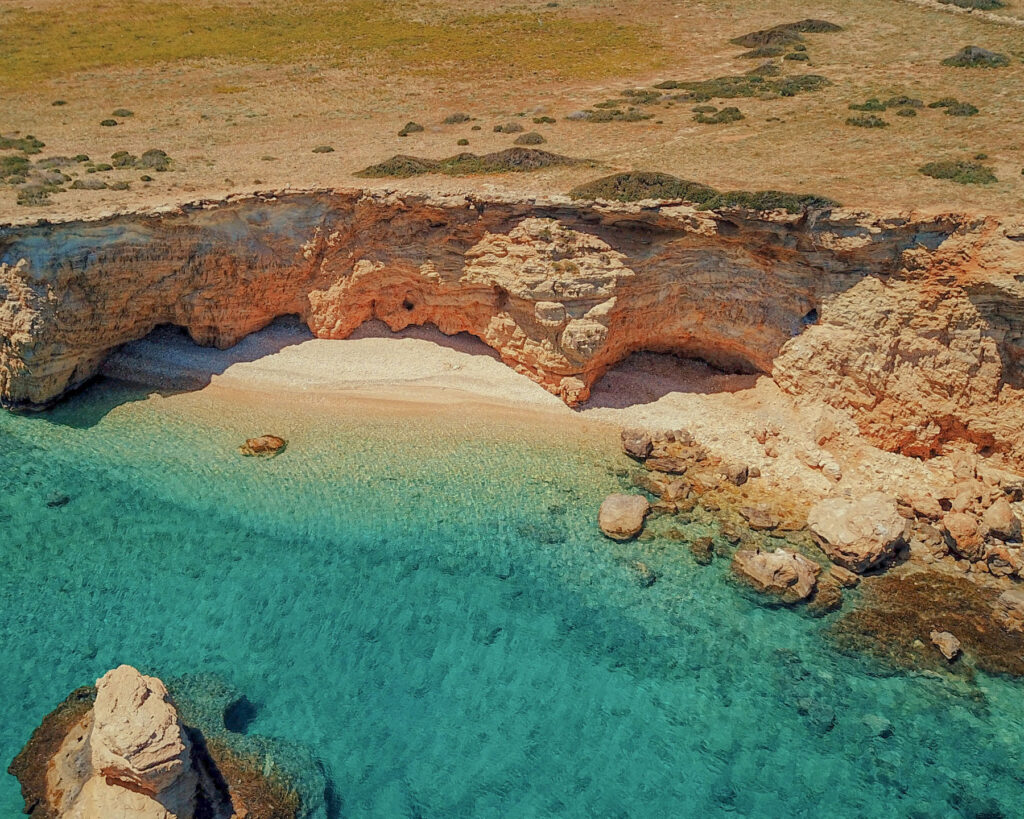
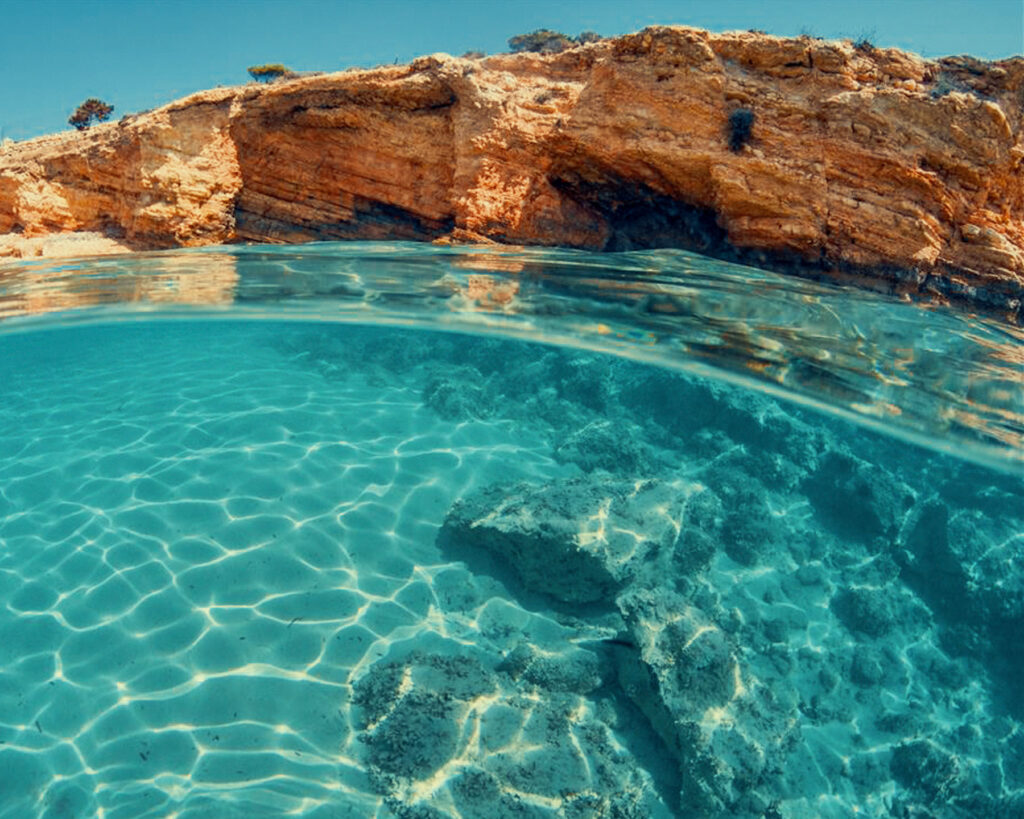
Go around the island – past the highest point, where the terrain tips – and everything changes. The western slope gives way suddenly to the eastern face and the contrast is so complete that it takes a moment to process. Vertical rock faces drop directly into the sea, carved by centuries of wave action into shapes that have no equivalent on the western side. Sea caves cut into the base of the cliff – some accessible by swimming, others barely large enough to enter, a few running deeper than the light allows you to see. Isolated conical and cylindrical rock formations rise from the water just off the coastline, creating a landscape that looks almost architectural.
In addition, there are beaches – two or three of them, very small, measured in meters rather than kilometers. They shouldn’t be there, given the verticality of the rock above them. But they are, with white sand and shallow, crystal-clear water that manages to be both perfectly calm and visually extraordinary at the same time. Consequently, reaching one of these small beaches by boat, anchoring just offshore and swimming in – with the cliff above you, the rock formations around you and nobody else in sight – is the kind of experience that’s genuinely hard to describe to someone who hasn’t done it.
The mythology of the area adds another layer. According to ancient tradition, Koufonisia and its surrounding islets were favored by the Nymphs – spirits of nature who blessed these waters – and by Poseidon himself, who was said to rest here during his journeys across the Aegean. The nearby island of Keros, clearly visible from Glaronisi, was one of the most important religious centers of the Early Cycladic civilization, predating even Delos. Ancient sailors made offerings before these waters. Therefore, there is something in the atmosphere of this particular corner of the Aegean that has drawn people here – and kept them quiet about it – for a very long time.
Getting to Glaronisi with Don Blue Yachting
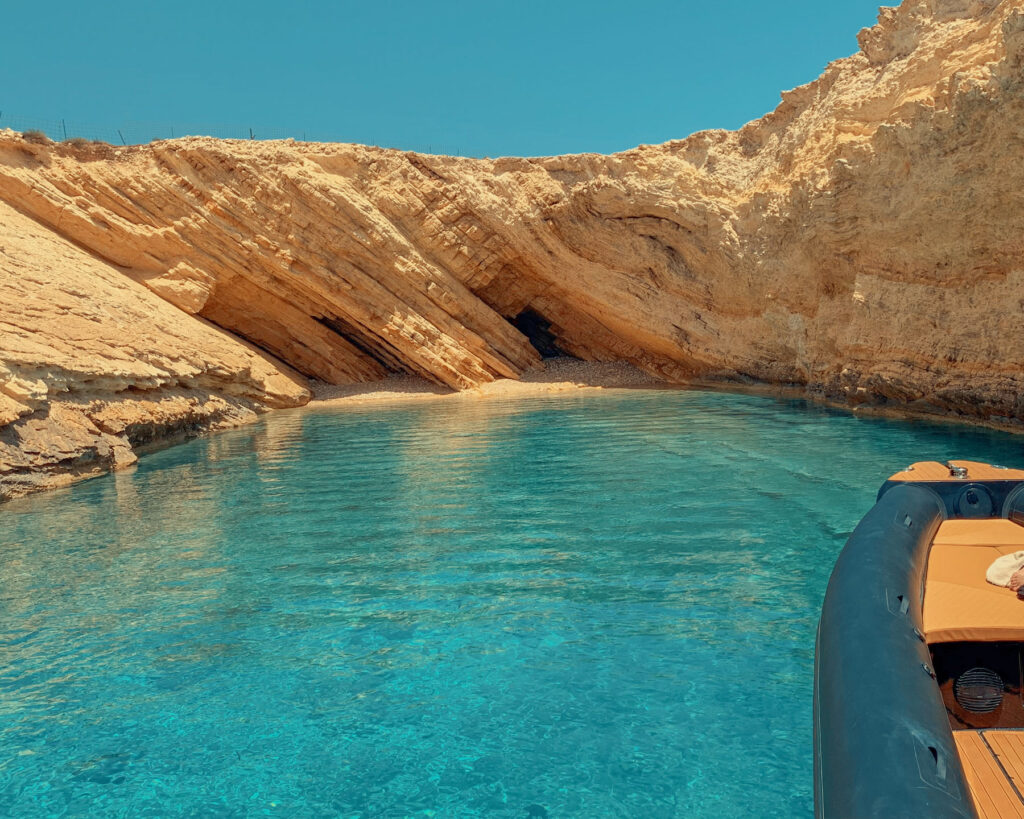
Glaronisi is reachable by the local excursion boats that run from Ano Koufonisi. However, those boats stop at the western anchorage – the calm side, the easy side. To reach the eastern face, with its caves and beaches and rock formations, you need a private boat and a captain who knows where to go.
Don Blue Yachting includes Glaronisi in private cruise itineraries from Mykonos and Paros – typically as part of a broader Koufonisia day cruise that covers Ano Koufonisi, Kato Koufonisi and the surrounding waters. The eastern face of Glaronisi is a natural stop on any route that approaches from the open Aegean rather than from the sheltered channel between the islands. Furthermore, the combination of the eastern cliff face, the sea caves and the hidden beaches makes it one of the most rewarding stops on the entire itinerary.
The western face of Glaronisi Koufonisia is what everyone sees. The eastern face is what people come back talking about.
Book your private cruise and find out what’s on the other side.
Find us at social media: Facebook – Instagram – YouTube
Glaronisi islet: Frequently Asked Questions
What is Glaronisi Koufonisia and why is it worth visiting?
Glaronisi is a small uninhabited islet near Koufonisia in the Small Cyclades, named after the hundreds of seagulls that nest there. From the western side, it looks like a smooth sloping hill – unremarkable from a distance. The eastern face is completely different: vertical cliffs, sea caves, tiny hidden beaches and extraordinary turquoise water. The eastern side is only visible and accessible by private boat, which is what makes it one of the most rewarding hidden stops in the eastern Cyclades.
How is the eastern face of Glaronisi Koufonisia different from the western side?
The contrast is dramatic. The western face is a smooth, unbroken hillside – the version visible from Koufonisia’s beaches. The eastern face drops suddenly into vertical cliff walls, sea caves and a handful of tiny sandy beaches that are only accessible from the water. Conical and cylindrical rock formations rise from the sea just off the cliff base, creating a landscape that has no equivalent anywhere nearby. You only see it once the boat rounds the island’s highest point.
Can you visit the eastern side of Glaronisi from the local excursion boats?
The local excursion boats from Ano Koufonisi typically anchor on the western side – the calm, sheltered anchorage. Reaching the eastern face requires a private boat that can navigate around the island and approach the cliff-base beaches and sea caves directly. Don Blue Yachting includes this stop as part of its private Koufonisia cruises from Mykonos and Paros.
What is the mythology connected to Glaronisi Koufonisia and the surrounding islands?
The waters around Koufonisia and Glaronisi are associated with the Nymphs of Greek mythology, who were said to have blessed the islands with their extraordinary clarity and beauty. Poseidon himself was believed to use this area as a resting point during his journeys across the Aegean. The nearby island of Keros – visible from Glaronisi – was one of the most significant religious centers of the Early Cycladic civilization, predating even Delos as a place of worship.